# Technical Report: Comparison of Botulinum Toxin Detection Standards and In Vitro Alternative Methods Between the Chinese Pharmacopoeia (ChP) and the European Pharmacopoeia (EP)
## 1. Overview and Core Testing Objectives
Due to its exceptionally high biological activity, Botulinum Neurotoxin (BoNT, including multiple serotypes such as Type A and Type B) is widely utilized across clinical medicine, neuroscience, and medical aesthetics. As a derivative of a highly pathogenic pathogen, its **potency assay** and **safety evaluation** are governed by rigorous statutory standards set by various national and regional pharmacopoeias.
In recent years, driven by the international “3R Principles” (Reduce, Replace, Refine), reducing live animal consumption and transitioning toward highly reproducible in vitro molecular or cellular assays has become an inevitable trend in global biological product quality control (QC). This report provides an in-depth comparative analysis of the testing standards, regulatory evolution, and mainstream in vitro alternative technologies for botulinum toxin detection between the **Chinese Pharmacopoeia (ChP)** and the **European Pharmacopoeia (EP)**.
2. Core Testing Standards Comparison Table
Comparative Dimension Chinese Pharmacopoeia (ChP Current Edition) European Pharmacopoeia (EP Current Edition)
Statutory Gold Standard Mouse Bioassay (MBA)• Determines the median lethal dose (LD50) or performs parallel-line bioassays. Mouse Bioassay (MBA)• Long established as the official referee method for quality control and release.
Regulatory Attitude Toward Alternatives Gradual introduction and encouragement of replacement• Allows and encourages manufacturers to develop and validate in vitro alternative methods that demonstrate good correlation with the traditional MBA. Explicitly incorporated into general chapters with active promotion• Explicitly encourages and drives manufacturers to utilize validated in vitro alternative methods for routine batch release and daily QC.
Mainstream In Vitro Alternative Technologies • Cell-based Assay• Enzyme-Linked Immunosorbent Assay (ELISA) • Cell-based Potency Assay• Endopeptidase Assay
Methodological Validation Requirements Manufacturers must demonstrate that the alternative method has a high degree of correlation and equivalence with the traditional MBA. The alternative method must undergo rigorous validation to prove that its specificity, sensitivity, and accuracy are not inferior to the traditional MBA.
3. Deep Dive into Core Testing Technologies
A. Traditional Mouse Bioassay (MBA)
Principle: Test samples at various dilutions are injected intraperitoneally into experimental mice. The survival rates are observed over a specific timeframe (typically 48 to 72 hours) to calculate the $LD_{50}$ or unit potency.
Limitations:** The assay consumes a massive number of live animals, requires a long testing cycle, and exhibits high coefficients of variation (CV%) due to individual biological differences in live mice (such as body weight, physical constitution, and injection operation errors), which limits reproducibility.
B. In Vitro Endopeptidase Assay —— *The Recommended Transition Direction in ChP & EP*
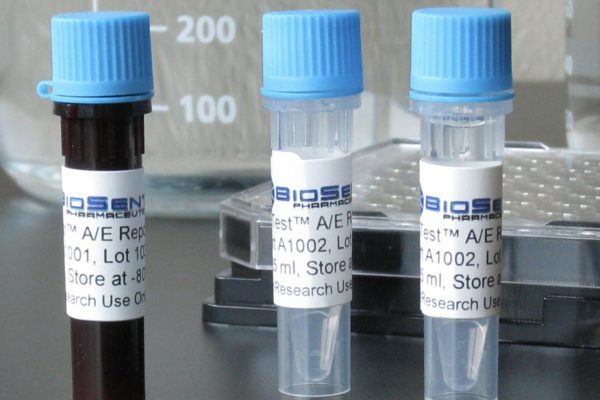
Principle: Botulinum toxin is fundamentally a highly specific zinc-dependent metalloprotease. Taking Botulinum Neurotoxin Type A (BoNT/A) as an example, it specifically cleaves the SNAP-25 protein within host neurons to block neurotransmitter release. In vitro endopeptidase assays (such as **BioSentinel’s BoTest® or BoLISA® technology platforms**) perfectly mimic this enzymatic cleavage process using unique Fluorescence Resonance Energy Transfer (FRET) artificial substrates or highly specific capture antibodies. When the substrate is specifically cleaved by the toxin, the fluorescence signal changes, allowing absolute quantification of the toxin’s catalytic activity.
Technical Advantages:
1. Highly Realistic Mechanism:Unlike standard ELISAs that only detect total antigen mass, the endopeptidase assay measures “biologically active toxin,” which aligns fundamentally with the activity requirements of statutory pharmacopoeia MBAs.
2. High Precision & Low CV%: By eliminating the individual differences of live animals, enzyme-catalyzed reactions based on standard microplates can control intra-assay and inter-assay coefficients of variation at a very low level (typically $\le 10\%$).
3. High Throughput & High Sensitivity:** Parallel testing for dozens of in-process controls or finished product batches can be completed within a few hours. The sensitivity reaches the picogram (pg/mL) or even sub-picogram level, fully matching or exceeding the traditional mouse lethality assay.
C. Cell-Based Potency Assay (CBA)
Principle: This method utilizes neurogenic cell lines sensitive to botulinum toxin to detect the entire biological toxicity pathway, including receptor binding, endocytosis, translocation across the membrane, and intracellular cleavage of target proteins. Its detection mechanism aligns closest to the actual in vivo physiological toxicity pathway, making it an advanced alternative technology recognized by both the ChP and EP.
—
4. Industrial Quality Control (QC) Application and Pharmacopoeia Compliance Validation Path
To ensure that the testing data from in vitro diagnostic kits (such as **BioSentinel kits**) fully satisfy the regulatory requirements of both the ChP and EP, manufacturers must follow a strict Method Validation path when introducing these methods into routine In-process Control or final batch release QC:
1. **Linearity and Correlation Studies:**
Using the same batch of botulinum toxin products or reference standards, perform traditional mouse MBA and in vitro kit assays in parallel to construct dilution-response curves. Validation data must demonstrate that the in vitro alternative method possesses an excellent linear correlation with the traditional statutory MBA method (typically requiring a correlation coefficient $R^2 \ge 0.95$).
2. Matrix Interference Evaluation:
Botulinum toxin formulations usually contain high concentrations of excipients (such as human serum albumin, gelatin, or high-concentration sodium chloride). Manufacturers must validate whether these matrix components interfere with the fluorescence signals or antibody binding of the in vitro detection system, thereby establishing the optimal sample dilution factor.
3. Methodological Precision and Specificity Validation:
Establish the repeatability and intermediate precision (RSD%) of the method. Concurrently, conduct specific cross-reactivity validation against different toxin serotypes (such as Types A, B, E, etc.) to ensure detection accuracy in complex matrices.
5. Conclusion
For both the Chinese Pharmacopoeia and the European Pharmacopoeia, **”gradually reducing live animal testing and transitioning toward in vitro molecular and cellular assays”** has become an irreversible international regulatory consensus. In actual biological product R&D and manufacturing quality control, actively adopting mainstream international in vitro high-sensitivity endopeptidase detection technologies—such as BioSentinel—not only perfectly aligns with the regulatory evolution of the 3R principles across global pharmacopoeias but also significantly accelerates high-throughput QC efficiency while mitigating laboratory biosafety risks.